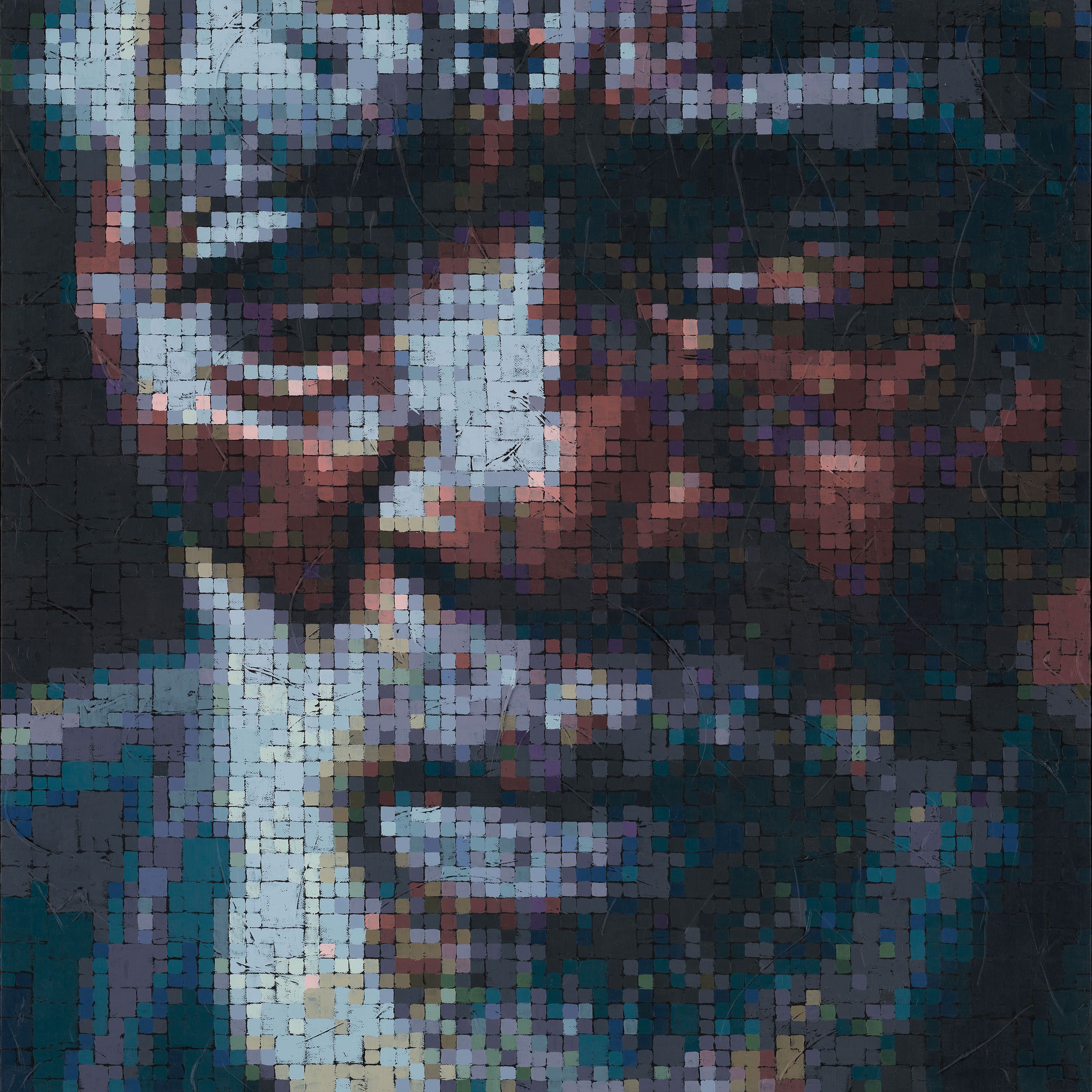
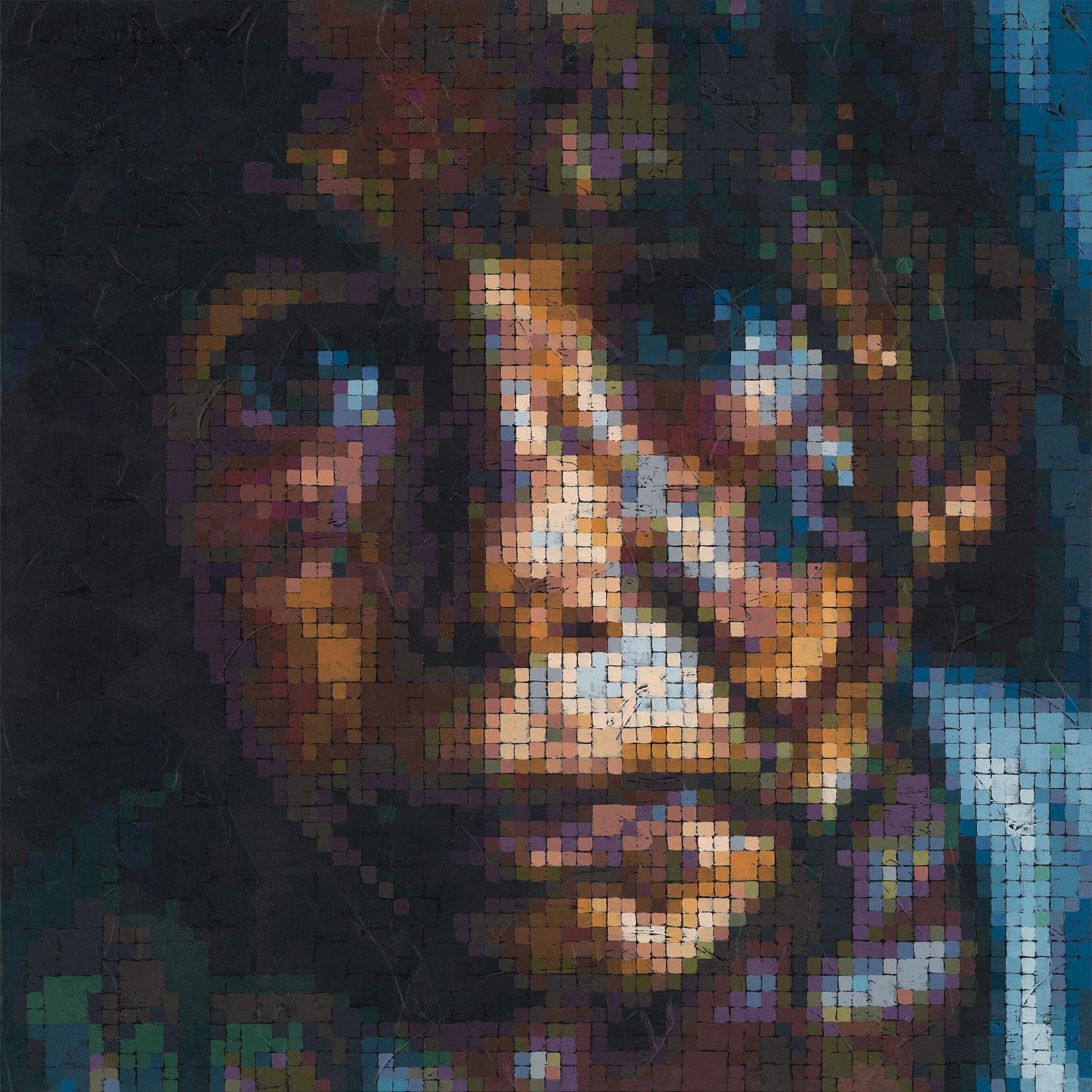
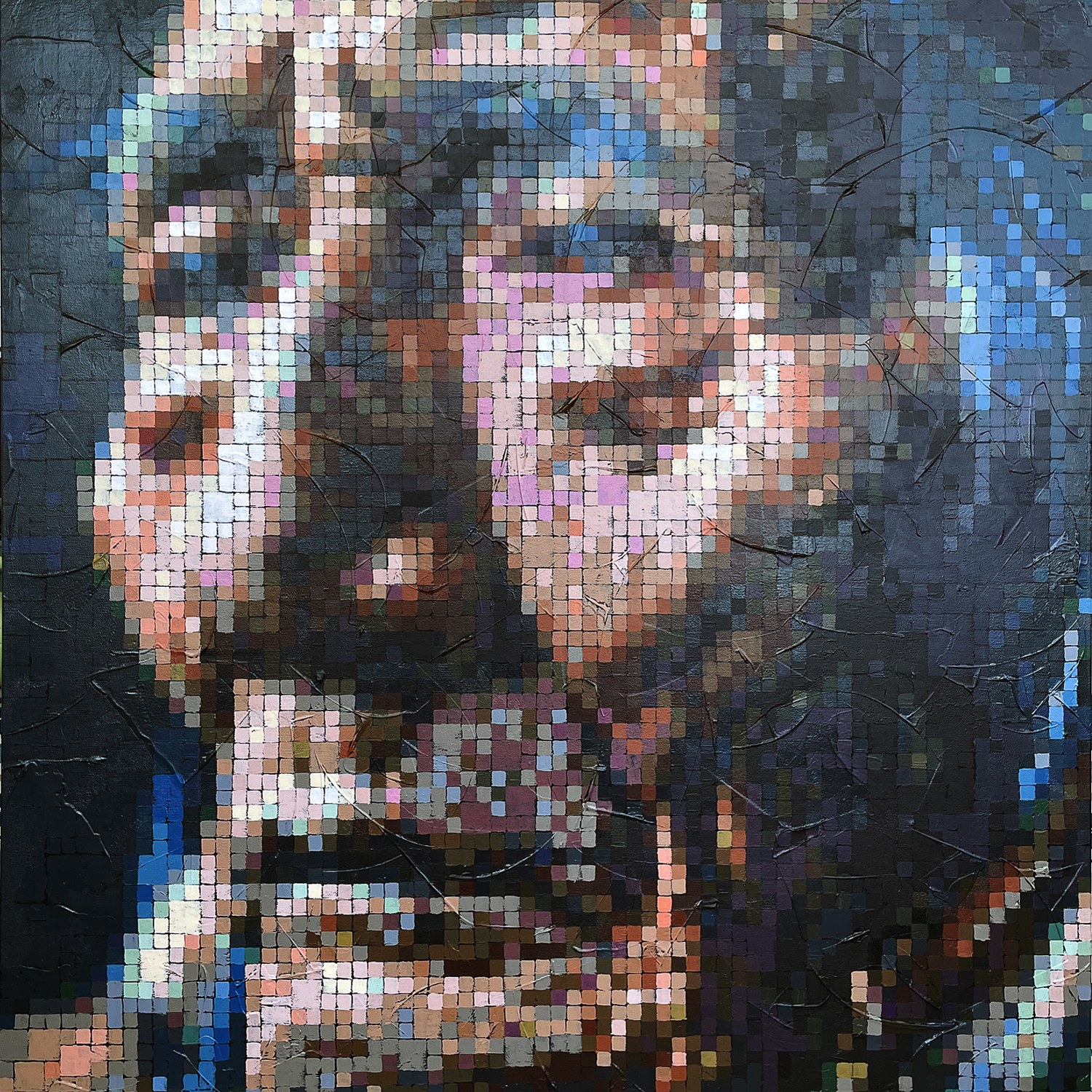
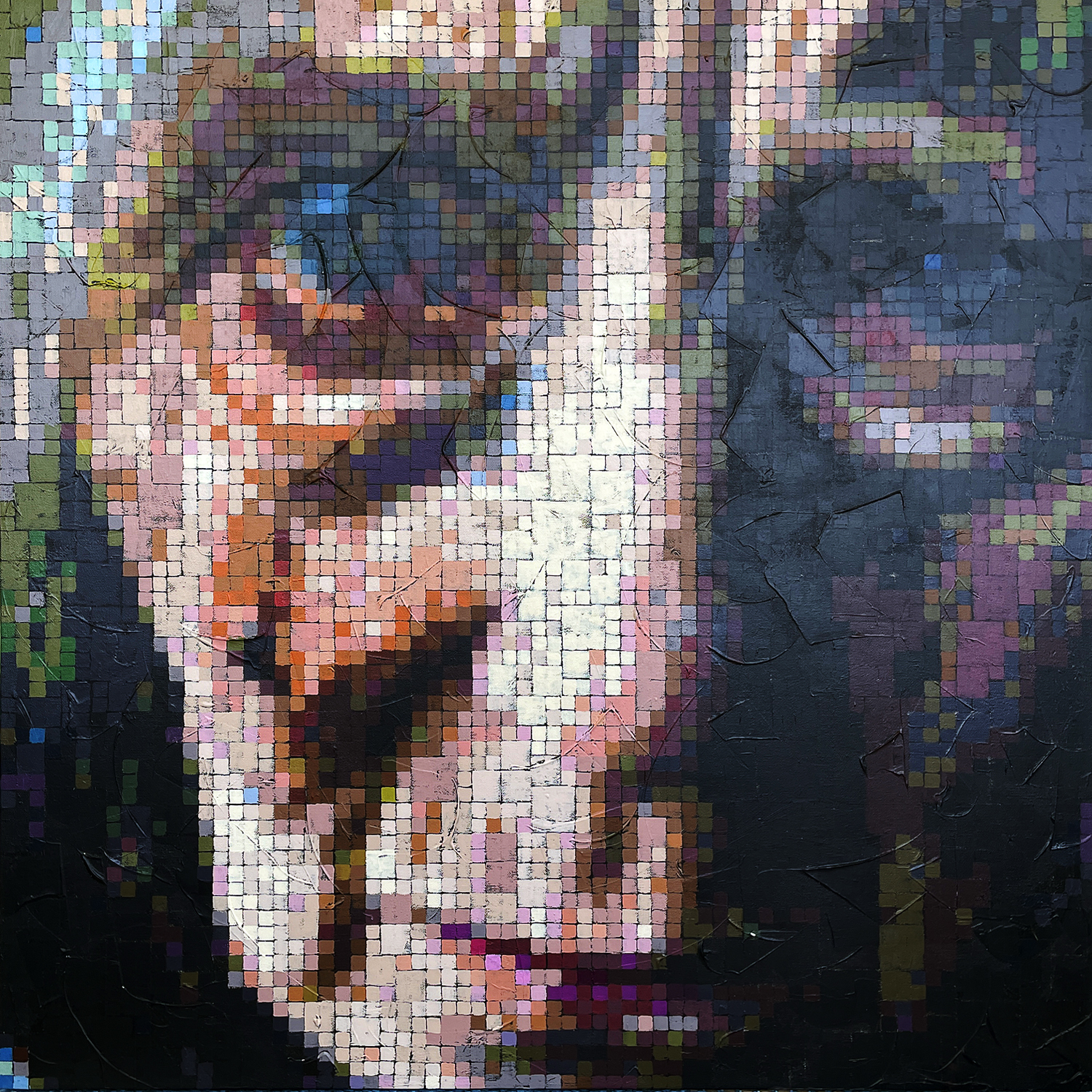
A deeply introspective portrait that explores endurance, memory, and the psychological weight of conflict. Constructed from thousands of small, individually painted squares, the work operates on two visual levels. Up close, the image dissolves into a fragmented grid of color—earthy reds, browns, ochres, and muted blues—each square functioning as an autonomous mark. At a distance, however, these fragments resolve into the weathered face of an aging man whose expression carries the quiet gravity of experience.
The subject’s features are defined by deep creases around the eyes, nose, and mouth, suggesting decades shaped by hardship and resilience. Rather than depicting action or violence, the painting focuses on the aftermath of a life spent in struggle. The warrior’s gaze appears steady and contemplative, implying that the true battle now resides in memory rather than on the battlefield.
The mosaic structure reinforces this theme of psychological fragmentation. Each square can be read as a visual metaphor for moments of experience—memories, scars, and emotional residues that accumulate over time. Together they assemble a unified identity, yet the seams between them remain visible. In this way, Savaşçı becomes less a portrait of a single individual and more an archetype of the enduring warrior: a figure defined not only by strength, but by survival, reflection, and the persistence of the human spirit.